

I have been designing digital experiences and building teams for 18 years. Across Jupiter, BookMyShow, and most recently PropertyGuru, I have noticed two patterns playing out in almost every organisation I have worked with. Cleartrip was the rare exception, and I will get to why a little later.
The two problems
Problem 1: Product & Design hardly collaborates with brand and marketing.
Designers, product managers, and engineers usually engage with brand and marketing only when something big is about to launch. Product OKRs almost always have a strong dependency on discovery, adoption and engagement, but instead of working with marketing on it, EPD teams go hunting for high-ROI hacks inside the product. Marketing could often move that needle with very little effort, but the collaboration just does not happen.
Problem 2: Brand and marketing have no idea what the product actually does.
They live in their own bubble, running sentiment analysis, chasing awareness, and writing tangential stories for newly launched features without really understanding them. So brand and marketing end up equally disengaged from the product.
This pattern shows up less in early startups, where everyone is more or less in the same room, and in companies like Apple or Airbnb, where brand and product seem to be one continuous thing. I am guessing that is because of how tightly they hold their brand and product together. Everywhere in the messy middle, between small startups and the medium size companies in the world, this is the default.
Why this matters
In my experience, the following happens when brand and product don’t work in sync.
The communication and visual language drift apart, so what the brand promises and what the product feels like don’t match.
Adoption stays low even when the feature is genuinely good, because nobody understood what it does and marketing did a poor job of telling the story.
Users end up feeling cheated, because the brand promised X+Y and the product delivers only X, and of course users notice.
Marketing spend balloons, because low trust forces you to buy attention you should have earned in the first place.
Most organisations I have engaged with or been part of, live some version of this. With AI and cost cutting, I expect it to get worse before it gets better. Companies will keep hiring researchers and external agencies to figure out things their own teams could answer if only the teams talked to each other. I call this Product and Marketing Cholesterol. It is the buildup that obstructs the flow of communication between teams.
Avoidable problem but…
Cleartrip where I worked didn’t had this problem, mainly because we did not have a dedicated marketing team back then. Designers built the landing pages for new features and explained the what, the how, and the why themselves. The same person who built the thing also told the story of the thing, which kept everything simple and clear, because there was no translation layer in the middle.
That setup will not work everywhere, so the next best option is genuine collaboration between product, brand, and marketing. The trouble is that team dynamics, organisational structure, and sometimes plain bad politics make this hard. I have watched teams go territorial and lose sight of the user more times than I can count.
I have never had much patience for that. I have always prioritised user experience and growing the business over interpersonal politics, and over the years I developed a way of working that I now teach as a framework. It works whether you have an in-house brand team or an external agency has handed you a brand deck to follow.
I call it the ABC framework. Let me walk through it.
A is for Abstract
This is the spirit of the brand. The vibe. The principles, the values, all the intangible things that make a brand feel like itself. They are vague by design, and that is fine. Do not worry if they do not click immediately.
“Think Different.” “Just Do It.” “Belong” These make sense to us today because they have been lived out for years, but I am sure when they were first written down inside the company, they sounded as fluffy as any mission statement. People rarely understand abstract principles on first read, so the right thing to do is let them seep in. Product, design, and engineering are mostly on the receiving end at this stage.
A few examples:
Airbnb’s values: Champion the Mission, Be a Host, Simplify, Every Frame Matters, Be a Cereal Entrepreneur, Embrace the Adventure.

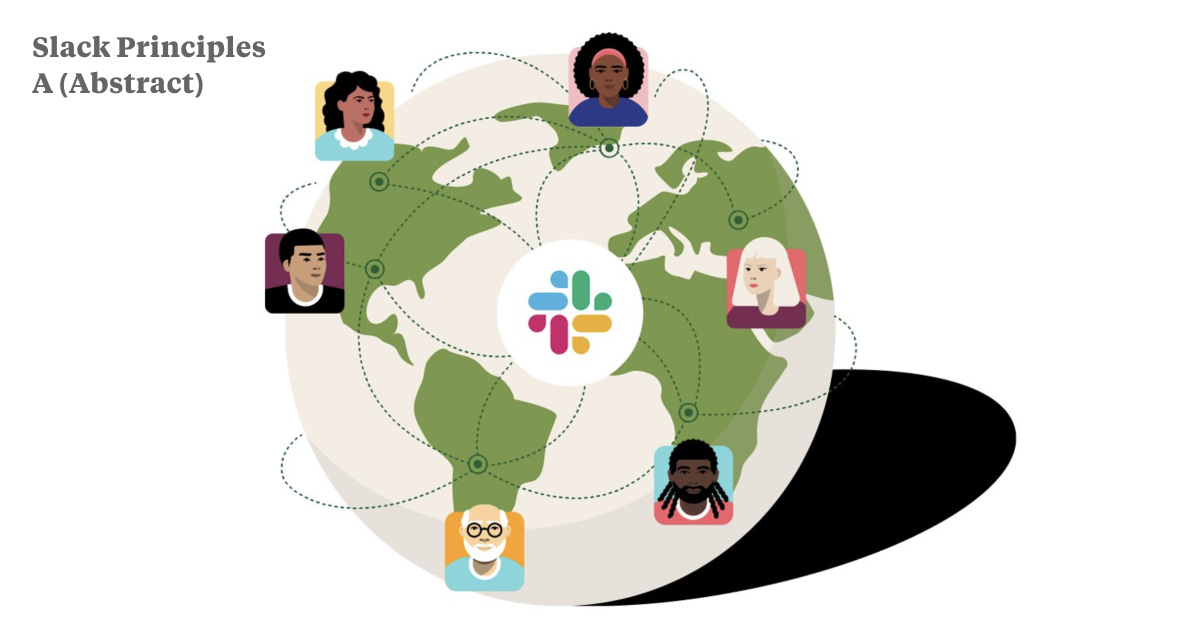
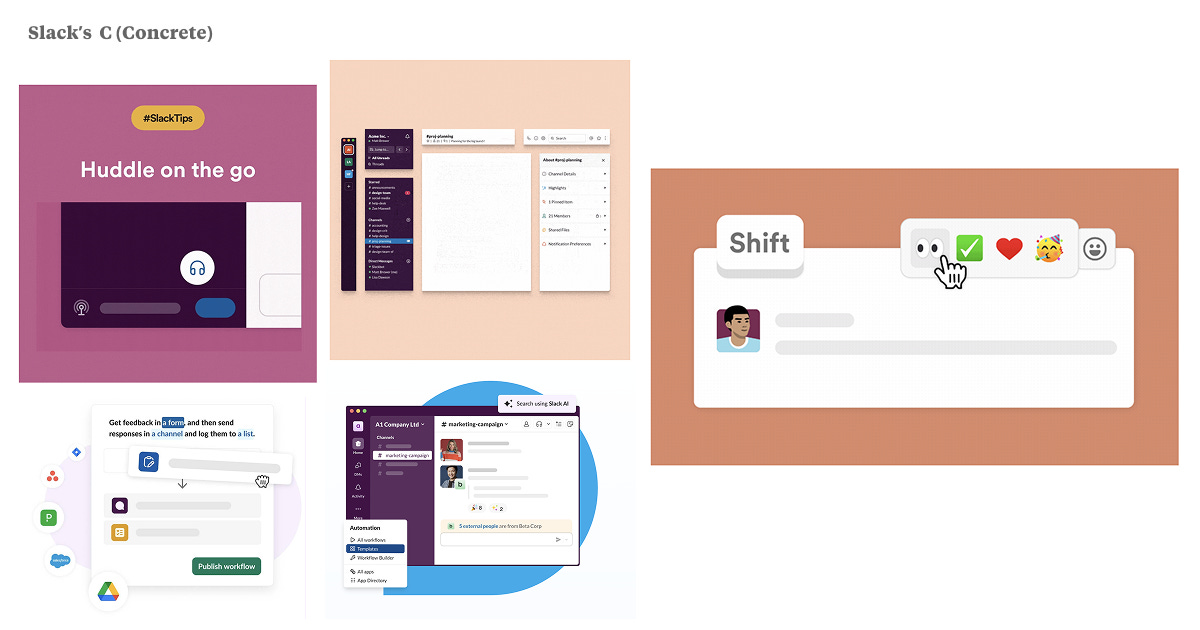
Slack’s principles: Empathy, Playfulness, Courtesy, Solidarity, Craftsmanship, Thriving.
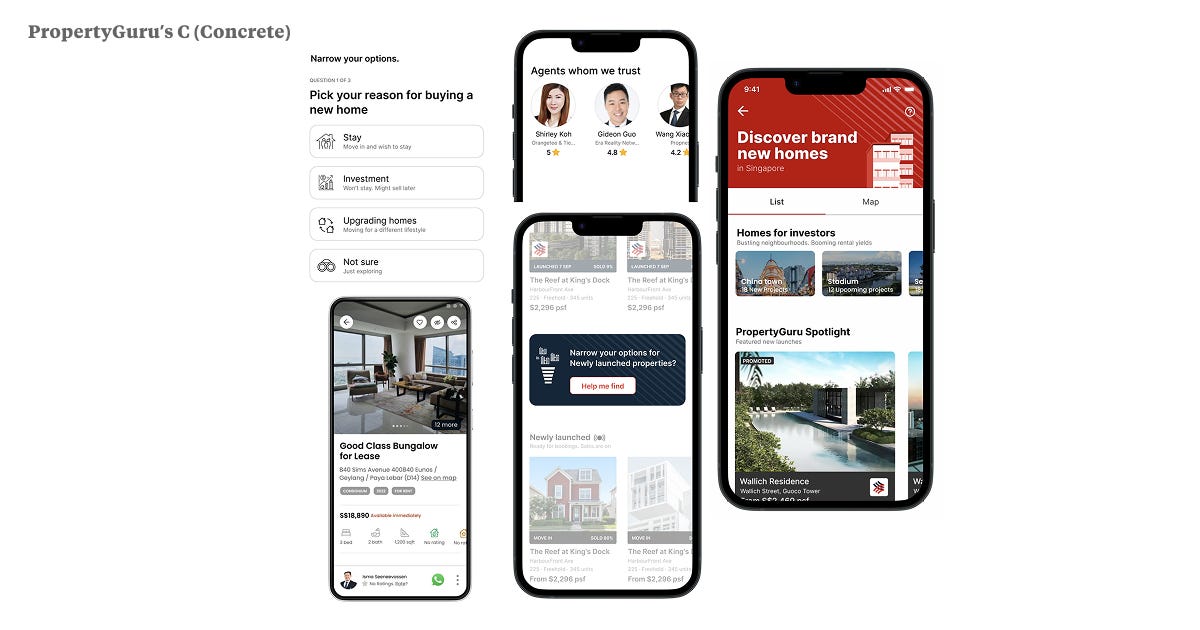
PropertyGuru’s principles (where I worked and led this transformation): Transparent, Guiding, Brave, Inclusive, Simple, Optimistic.
These were given to me by the brand team, and they made sense to me, so I went with them.

If you read these out of context, they could mean almost anything to almost anyone inside the organisation. That is the nature of Abstract.
B is for Bridge
This is the part most companies skip, and in my view, it is the most important part of the whole framework.
The Bridge is where you turn abstract principles into something tangible: logo and colour usage, icons, photography style, typography, tone of voice, illustration style, motion, and the design system itself. Designers can cook up assets that help the rest of the organisation actually visualise what the principles mean. The point of the Bridge is to make the abstract less ambiguous and more usable, and this is where good leaders earn their salary.
Run workshops. Pull brand and product into the same room. Have healthy arguments. Distill the principles into something tangible and relatable, and not just feel-able (just made that up).
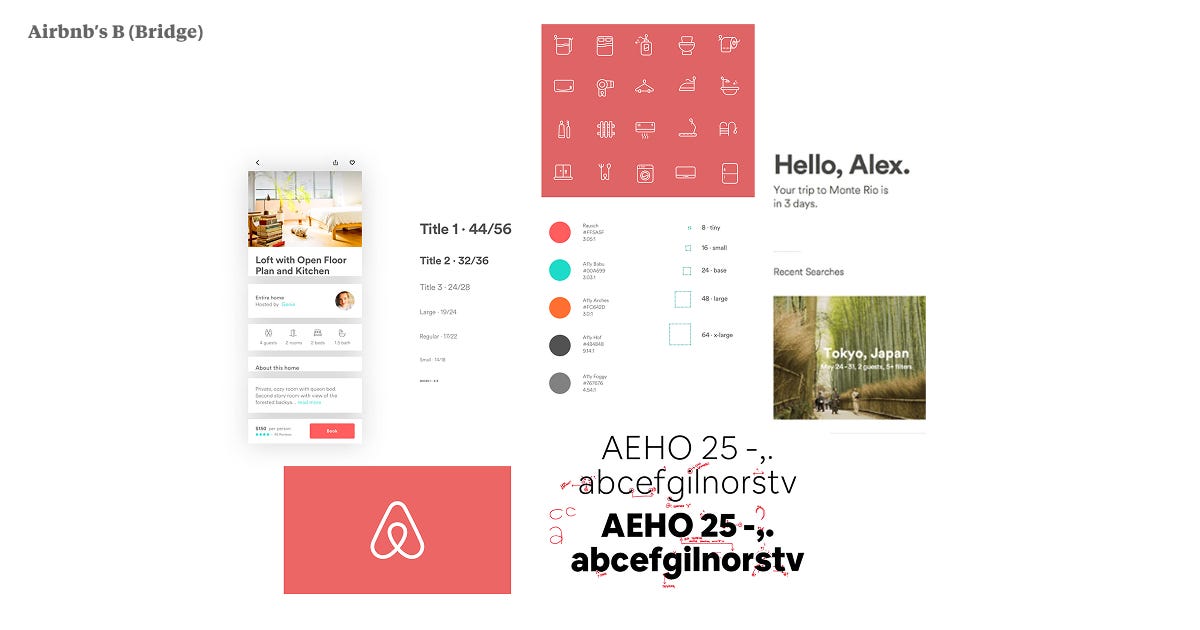
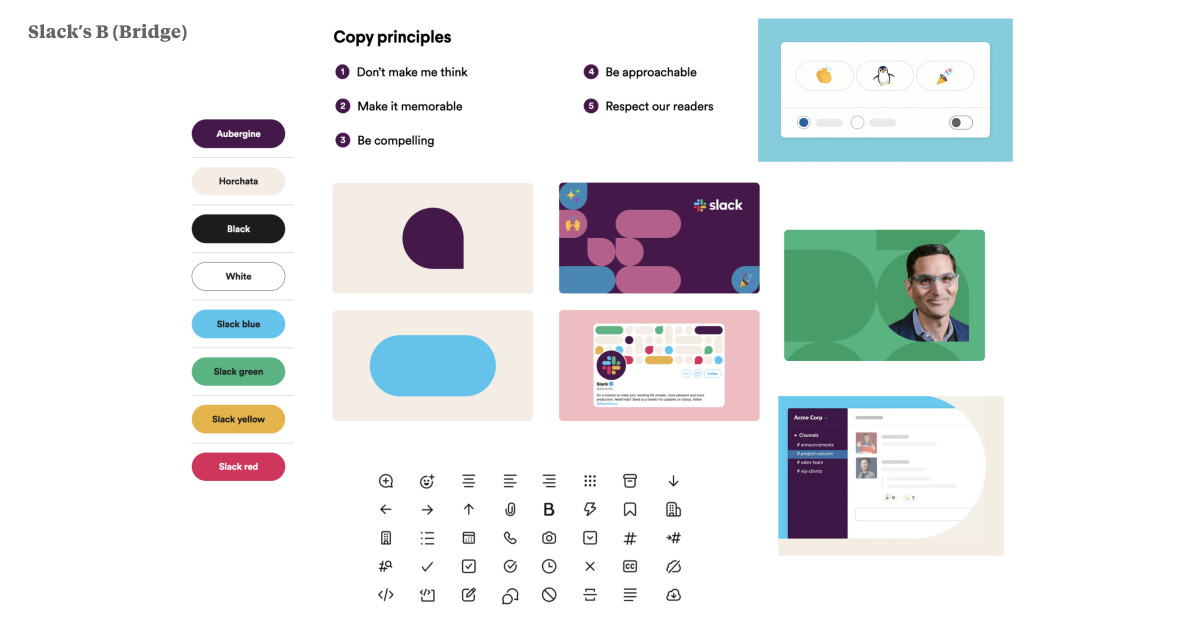
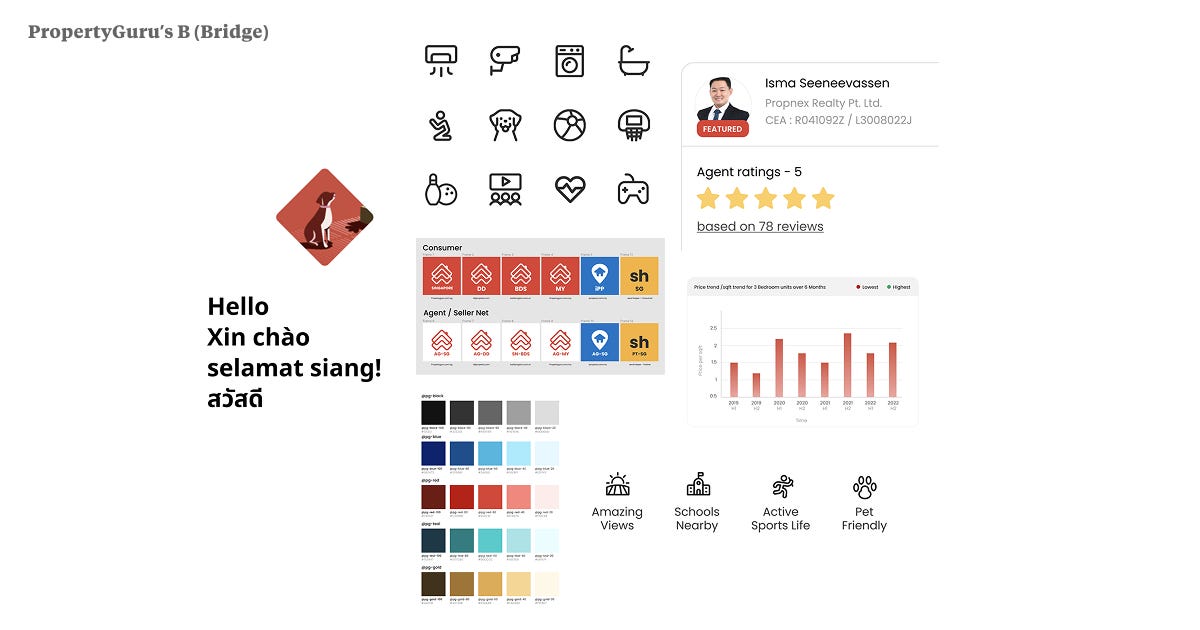
Here is what the Bridge looks like for the three brands I mentioned earlier:
For Airbnb’s principles of Champion the Mission, Be a Host, Simplify, Every Frame Matters, Be a Cereal Entrepreneur, and Embrace the Adventure:
For Slack’s principles of Empathy, Playfulness, Courtesy, Solidarity, Craftsmanship, and Thriving:
For PropertyGuru’s principles of Transparent, Guiding, Brave, Inclusive, Simple, and Optimistic:
C is for Concrete
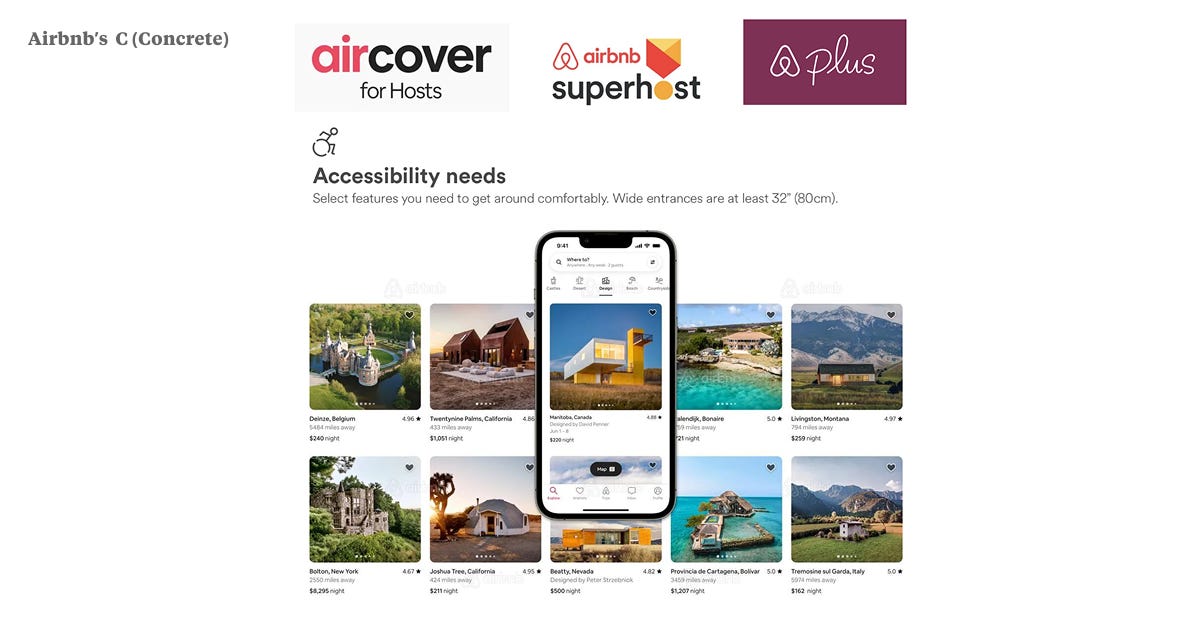
This is what users actually see, touch, and use. Real screens, real interactions, real experiences, the actual product or feature in their hands.
When the Abstract has been absorbed properly and the Bridge has done its job, the Concrete almost has to feel coherent with the brand. At this stage brand and marketing are mostly on the receiving end, picking up the story the product is already telling and amplifying it.
Same three examples, this time as they show up in the product itself:
Walking the talk
A brand manager once walked up to me and said, “Our brand is like a sage. Like a guru.” (You can probably guess the company.)
I said, “Sure, sage sounds great.” Then I asked, “When the user runs into ‘No results found,’ can I write No homes in this entire cosmos?”
We both laughed.
The point is this. No matter how rich your Abstract sentiment is, the end user only really cares about whether your product is going to improve their life, whether it is worth the money, and what they need to do once they like it or need it. Everything else is showbiz and saving your job.
A short cheat sheet
Once the Bridge is solid, do not keep changing it. Treat it like infrastructure. It can be refreshed when the brand itself changes, but it should not be rebuilt every quarter.
Three habits to keep your product, brand and marketing coherent:
Every design decision should come from the Bridge assets. Reusing doesn’t mean you are not creative enough, rather reinventing the wheel every time is naive. (May be another post)
Every product decision should flow from the Bridge’s promised positioning. You can challenge the positioning, but not during quarterly roadmap planning. Otherwise you end up shipping incoherent experiences and creating exactly the problems I started this post with.
Every engineering decision is anchored to the Bridge as well. If your brand says “fast,” you better tune the system to deliver results in the time the user expects. If your brand says “trustworthy,” your security, transparency, and error states better demonstrate it.
Bridge is the key, and good leaders focus on it. I have done it for most of my career, and I am now exploring opportunities where I can keep doing it, alongside good, smart, high-integrity people who care about the work.
If that sounds like the kind of team you are building, I would like to hear from you.