

Classifieds since 2006
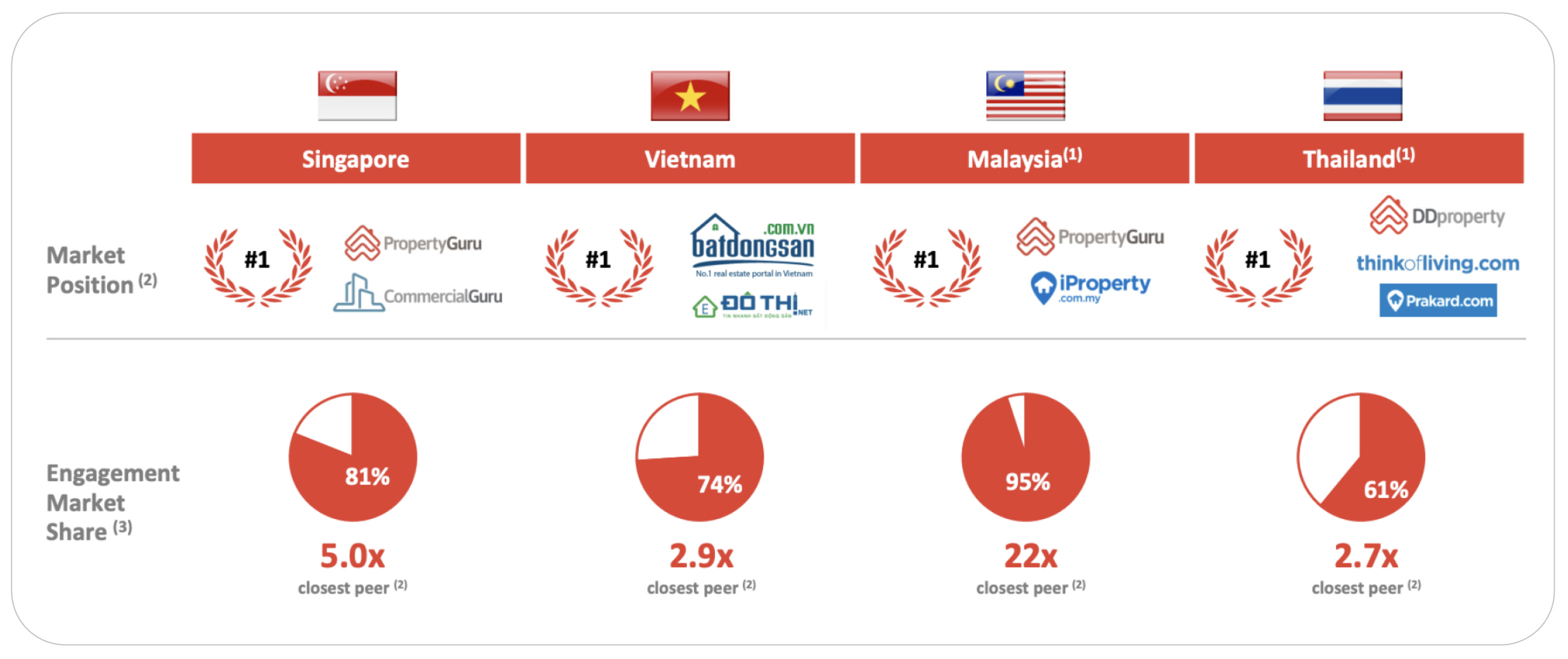
PropertyGuru is Southeast Asia’s largest real estate platform, dominating 90%+ market share across Singapore and Malaysia.
We’d built our business on a simple classifieds model: agents list properties, home seekers browse, they connect via phone or email, and... PropertyGuru disappears from the story. Assume it to be classic Newspaper Classifieds.
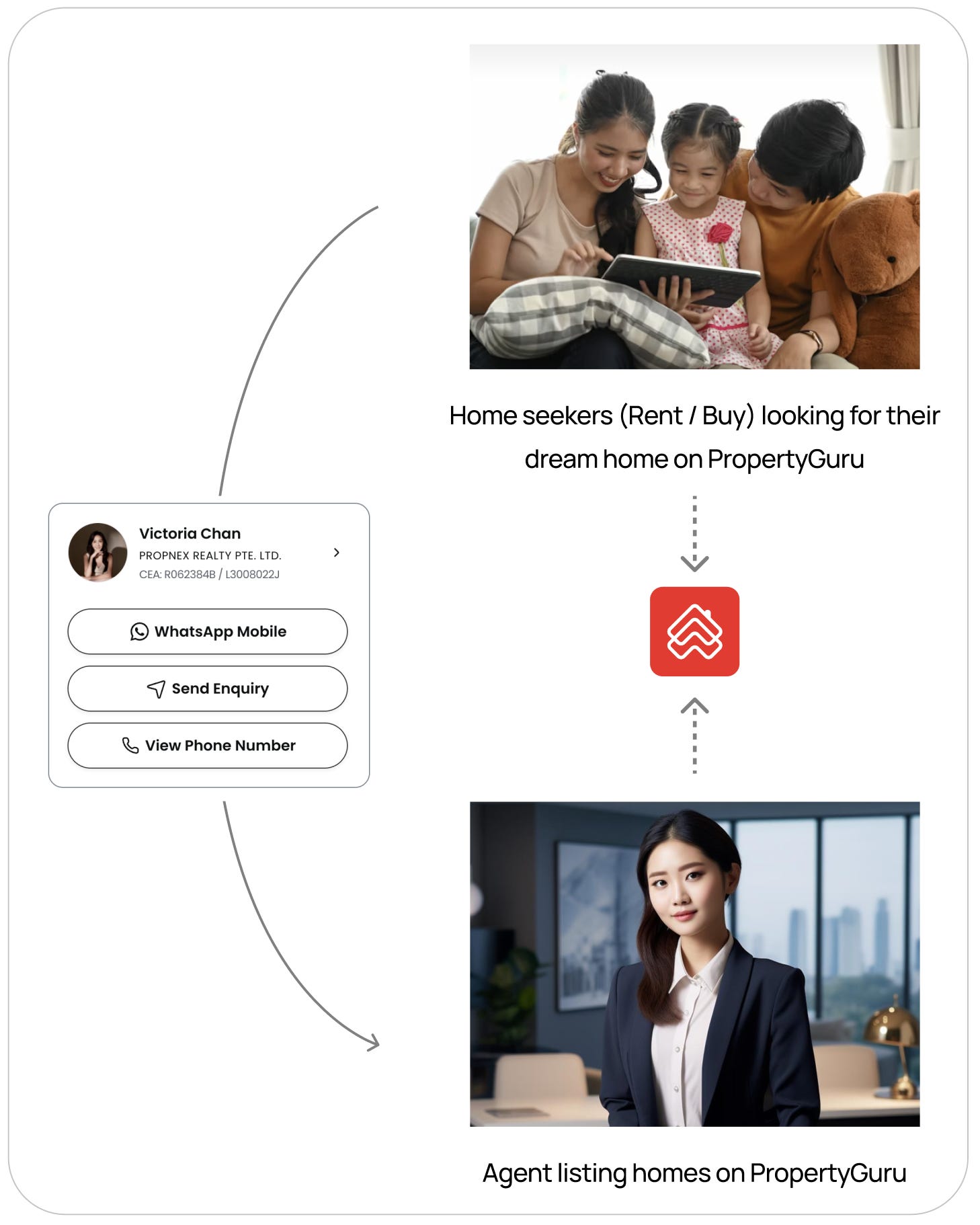
We had zero visibility into what happened after that first connection. Did the agent respond? Was the listing even real? Did the seeker find their dream home or get ghosted? We were generating 700,000+ leads per month in Singapore alone, but we had no idea if we were actually helping people find homes.
We’d built a classifieds business, but users expected a marketplace. And that expectation gap was quietly eroding trust in our platform.
Navigating a two-sided marketplace
The challenge was to transform PropertyGuru from a passive classifieds platform into an active marketplace that takes responsibility for the entire home-seeking journey without breaking the 16-year-old business model that agents had built their livelihoods on.
Home seekers needed transparency, accountability, and protection from bad actors
Agents (our paying customers) needed efficiency, lead quality, and control over their business
PropertyGuru needed to insert itself into the conversation without disrupting the S$100M revenue engine
This was not just a design project. It was an organizational transformation requiring alignment across Product, Engineering, Sales, Legal, Data, Compliance, and Marketing.
Multi-layered research
We all knew the problem through data, customer care complaints and App store, Play Store reviews. But to illustrate the problem vividly, I led my research team to build evidence of the problem:
Research approach (3 months across Singapore):
Home Seeker Research:
17 in-depth interviews with recent home buyers/renters
780-person survey via external agency (SurveyMonkey)
Google reviews analysis using AI sentiment scraping
Agent Research:
58 hours shadowing 7 agents across different agencies
400-agent survey via Sales team partnership
Analysed support tickets & Customer Care emails
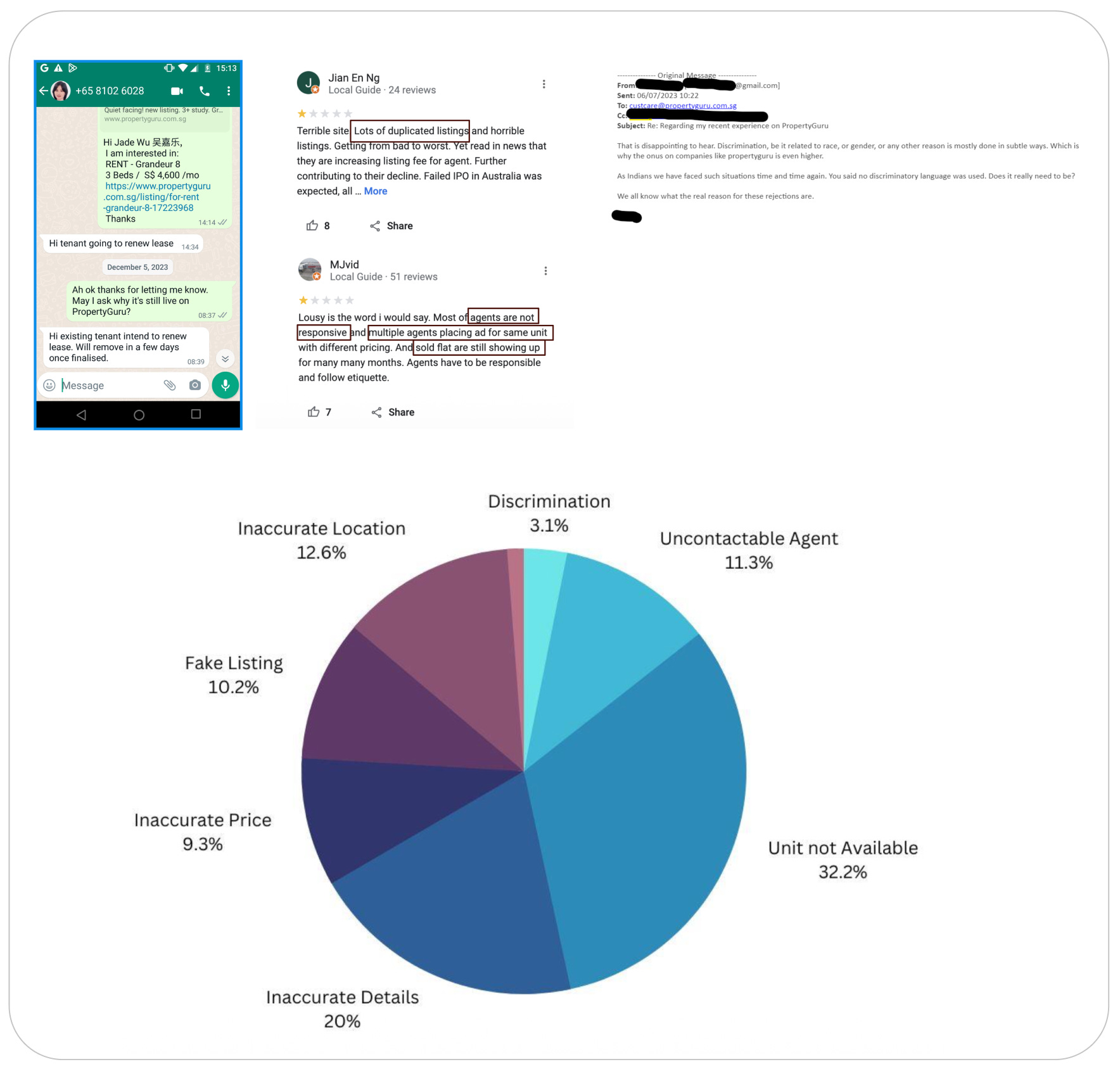
Key findings of the research
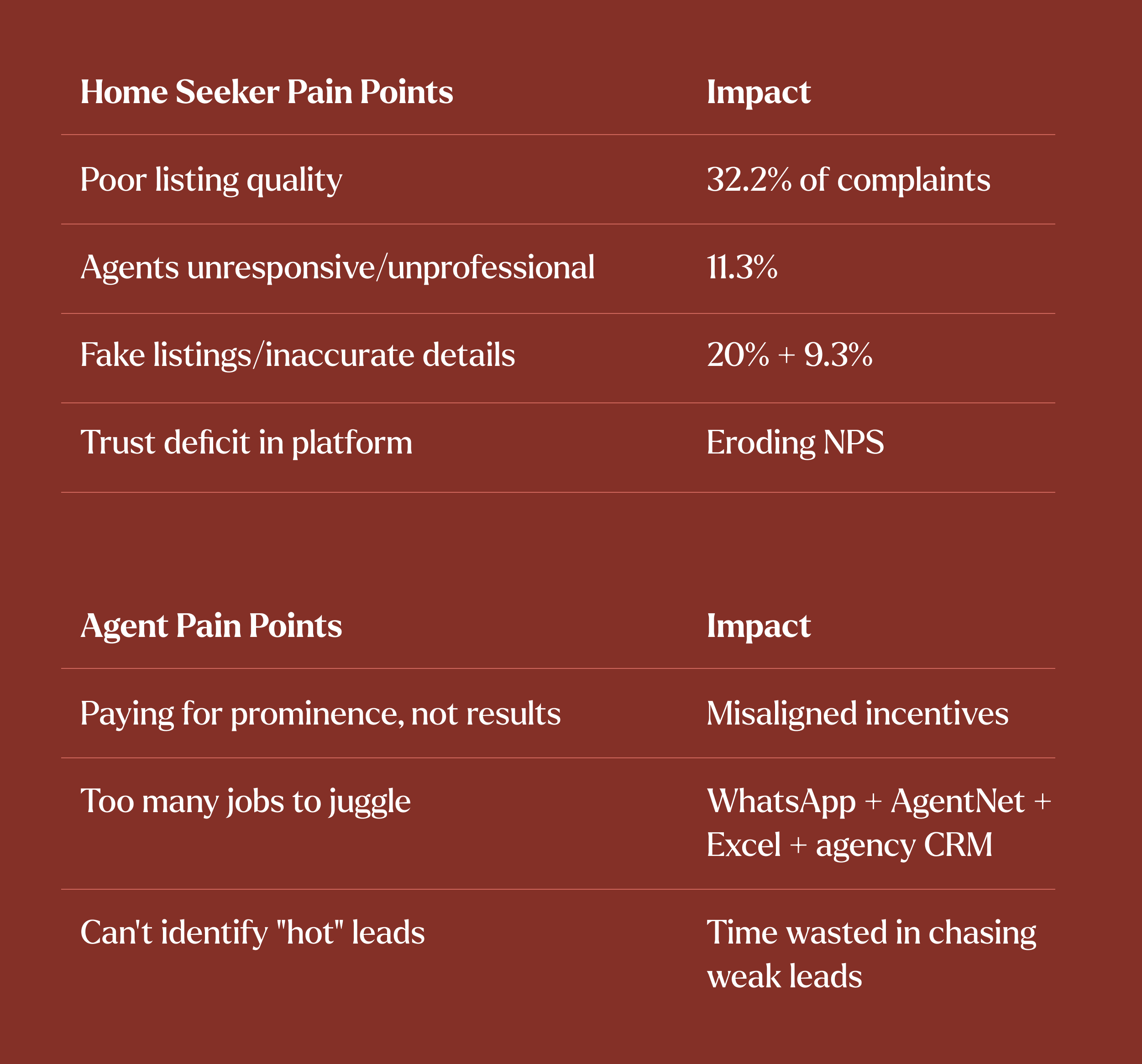
Agents were paying us for visibility, but we couldn't prove we were delivering actual business outcomes. Home seekers were losing trust because we weren't accountable for bad actor behaviour.
Aligned competing stakeholder priorities
As design leader, my job was orchestrating consensus across teams with conflicting goals honouring both sides of the marketplace:
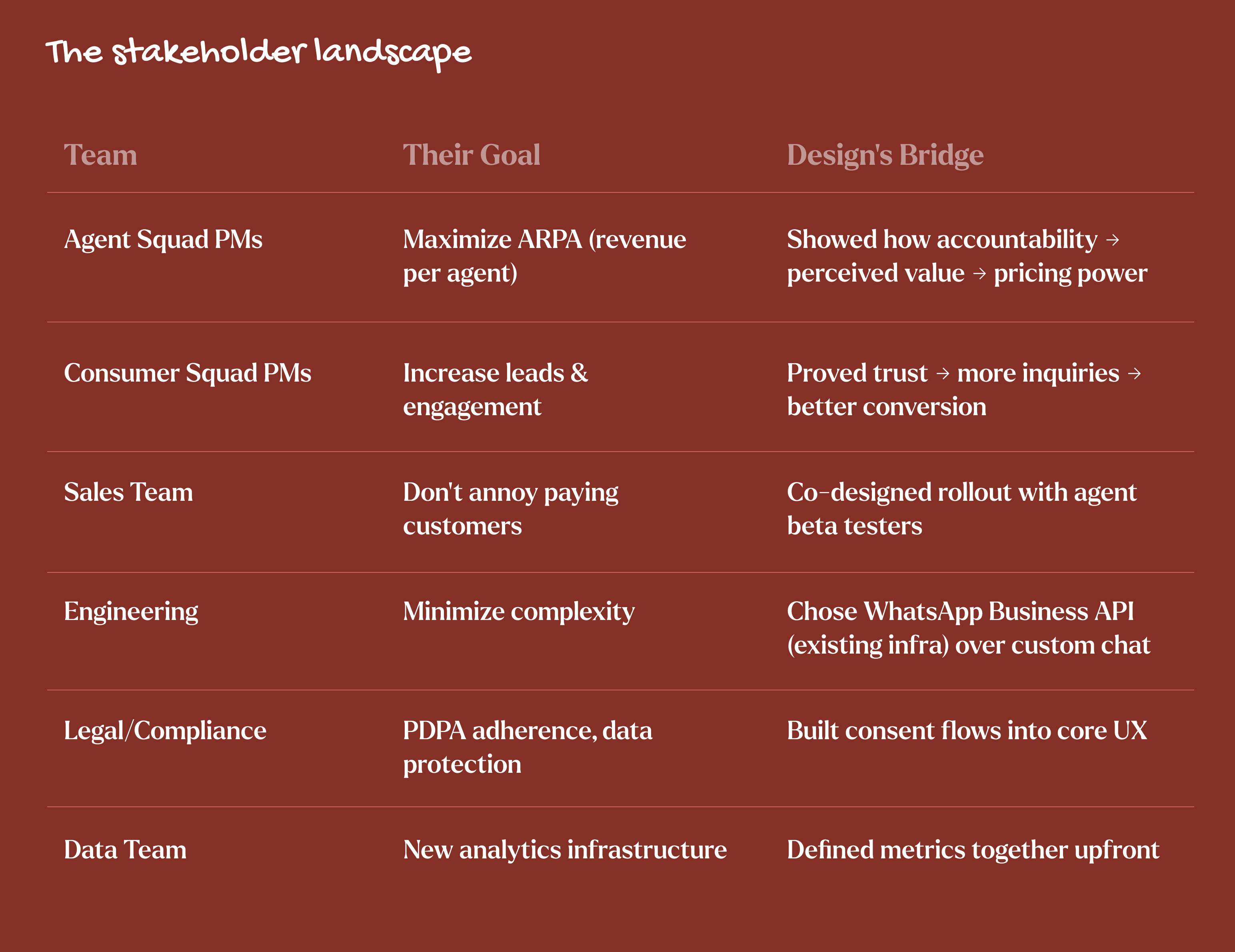
This changed the conversation from “Should we?” to “How fast can we ship?”
Organised workshop to bring alignment and clarity in plan of action
We did rapid prototyping of the actual flow. Quick sketches of newly imagined flow - Seeker side. Mock-up of Lead management for agents (inspired from inbox)
We did rapid testing of Agent flow with sales and 7 trusted agents and of Seeker flow with 10 (6 Rent, 4 Buy) home seekers.
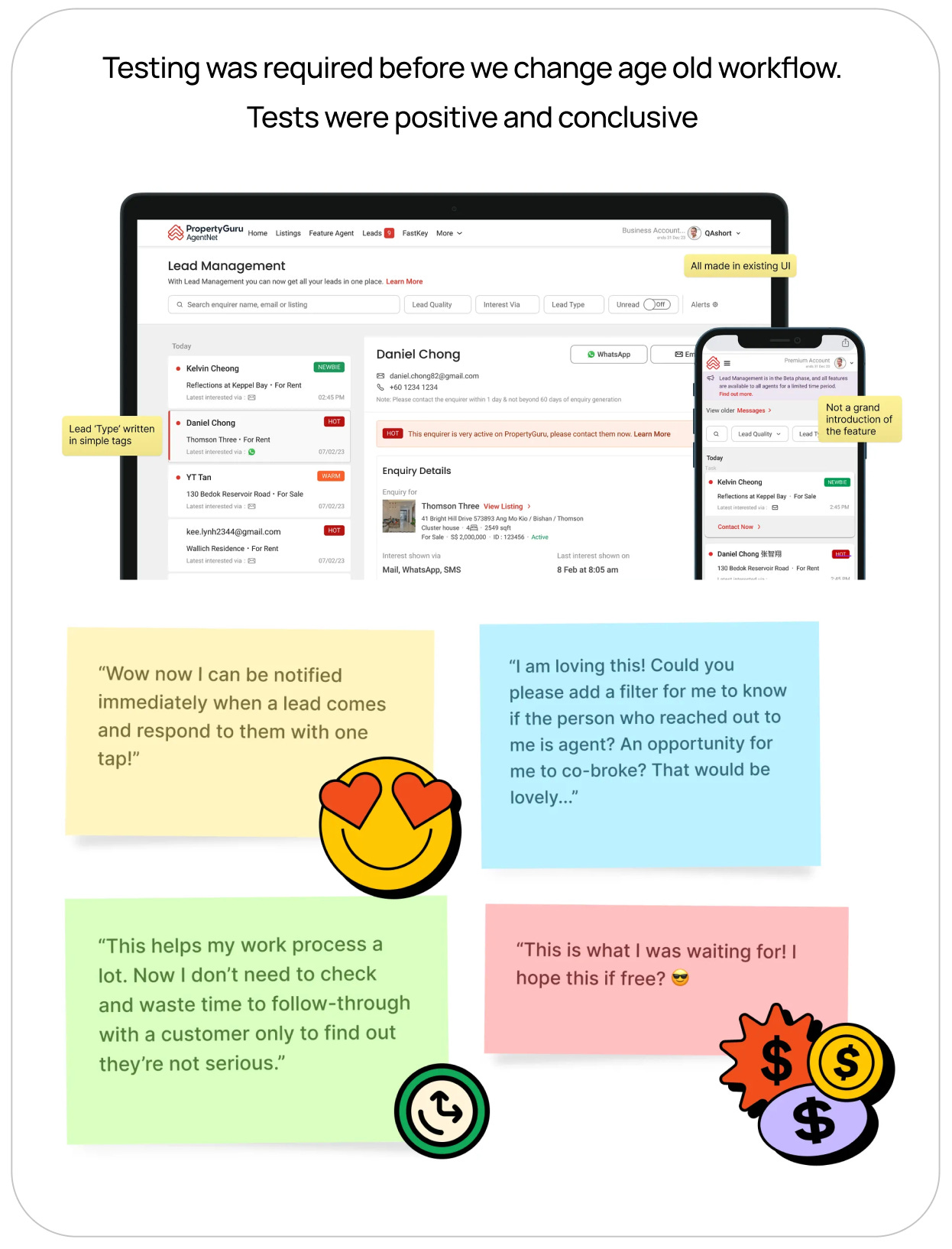
Classifieds to Marketplaces (First step)
We were in the loop for the first time in 16 years. This loop was created by introducing Whatsapp for Business. Whatsapp has 98% penetration in Singapore, the UX is familiar and we wanted no additional app friction. This decision was led by Design and Product Team.
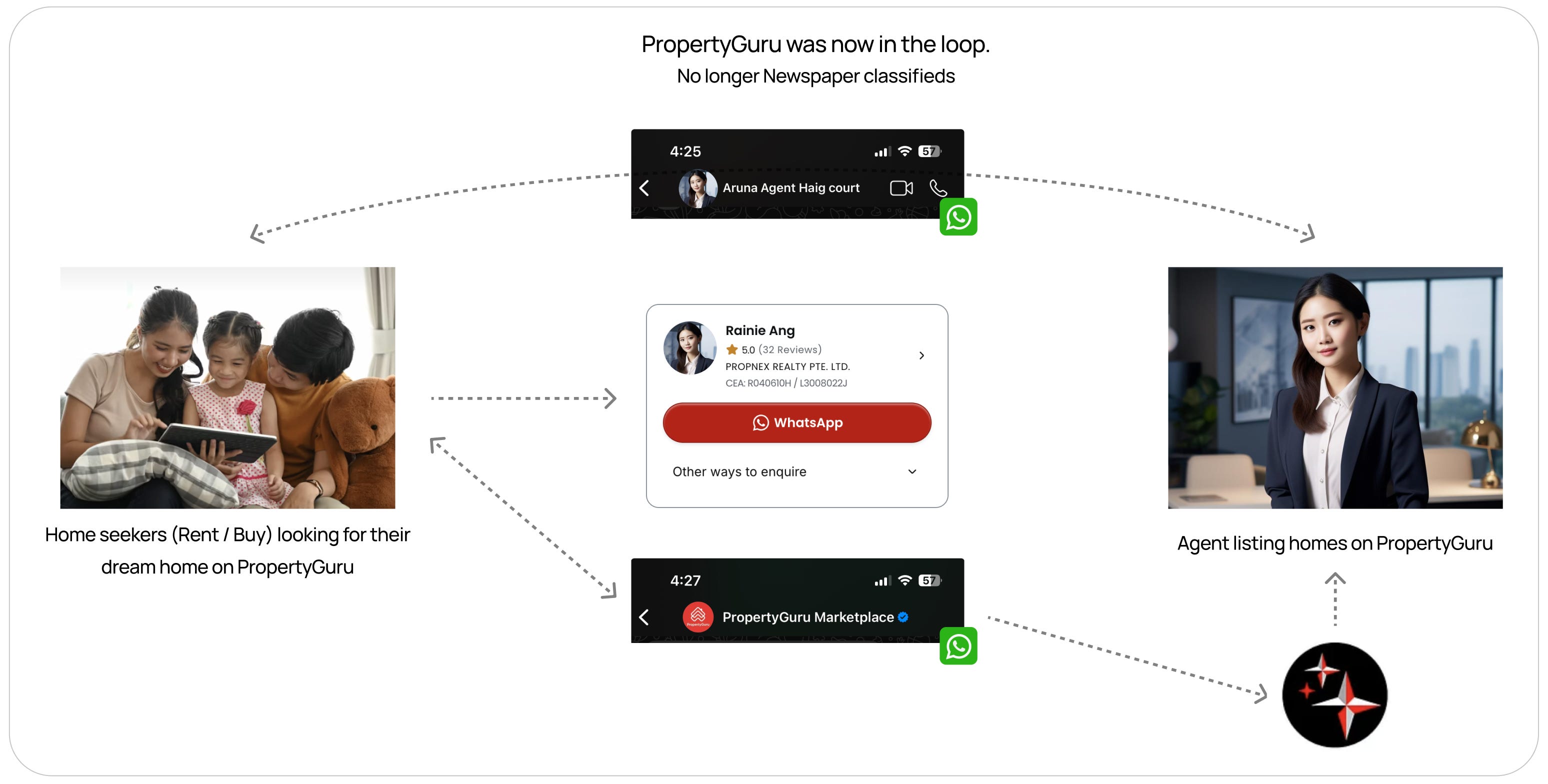
Progressive disclosure of agent contact was handled by Whatsapp introductory message. Agents feared losing control; seekers wanted options: PropertyGuru WhatsApp shares agent details after intro message, giving agents 1st response advantage.
Seeker side experience
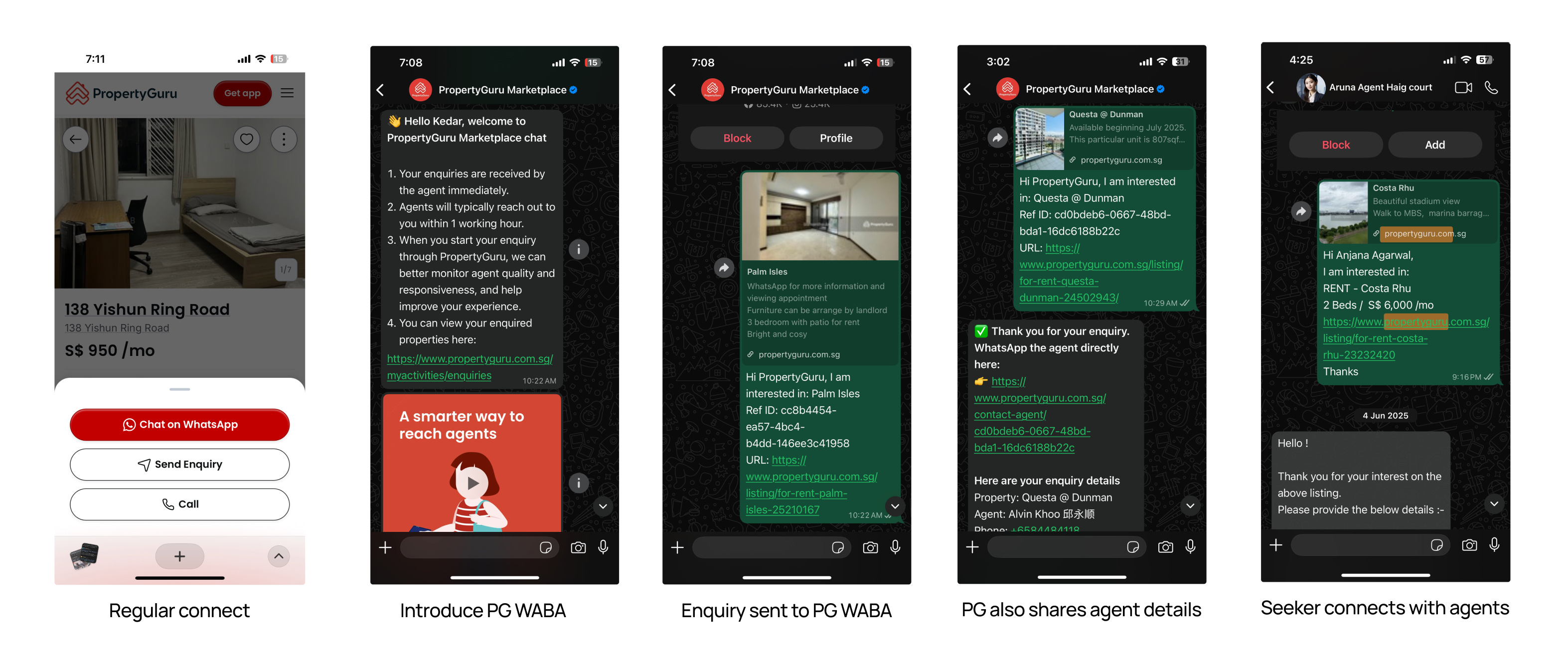
Agent side experience
Earlier, leads arrived as notification to agents on multiple channels directly. They had to manually track everything.
The new Lead Management System acted as one-stop-shop for agents to manage all their leads. (70%+ Leads for agent comes from PG in their business) It served as a centralised hub (mini CRM) to access all leads in one place.
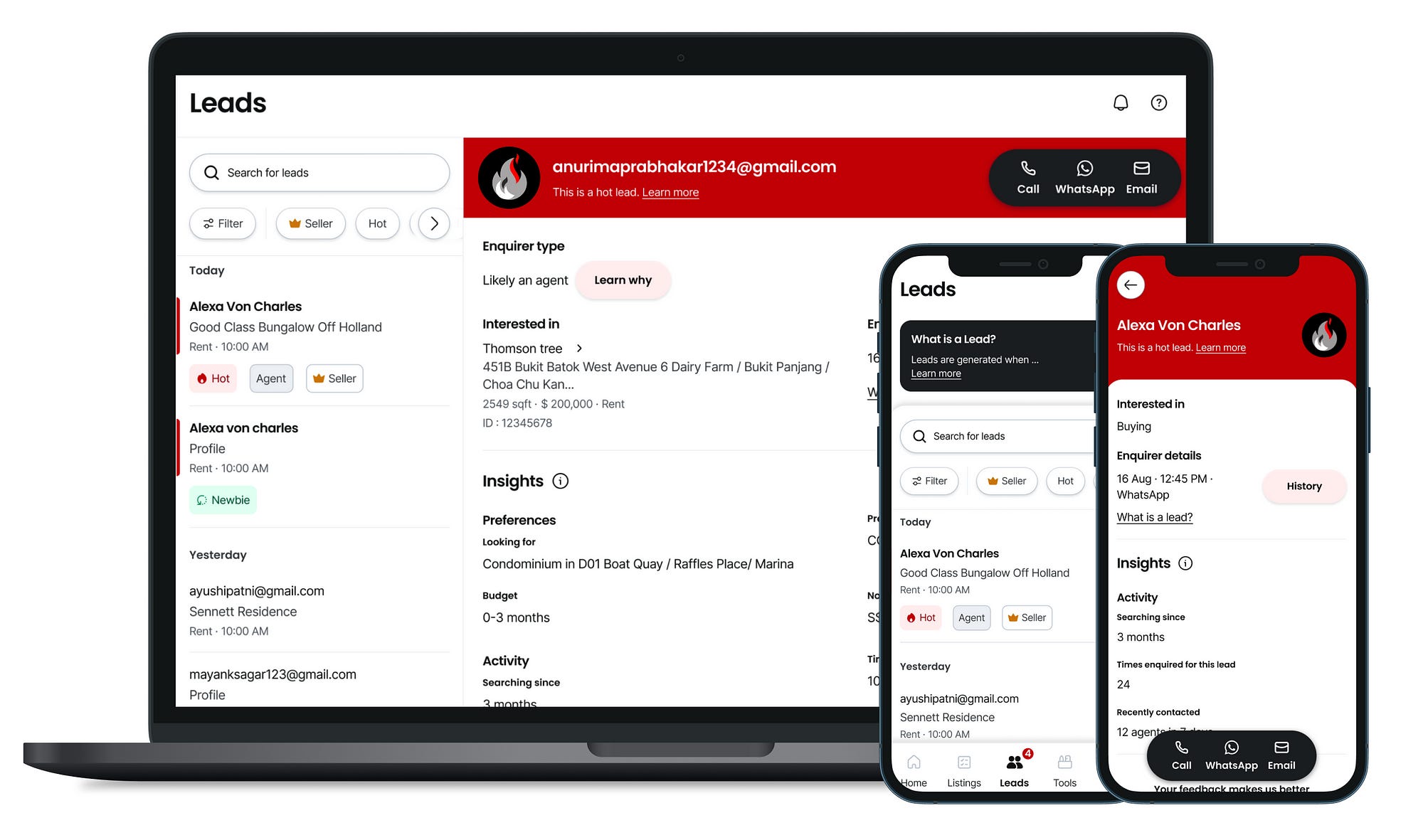
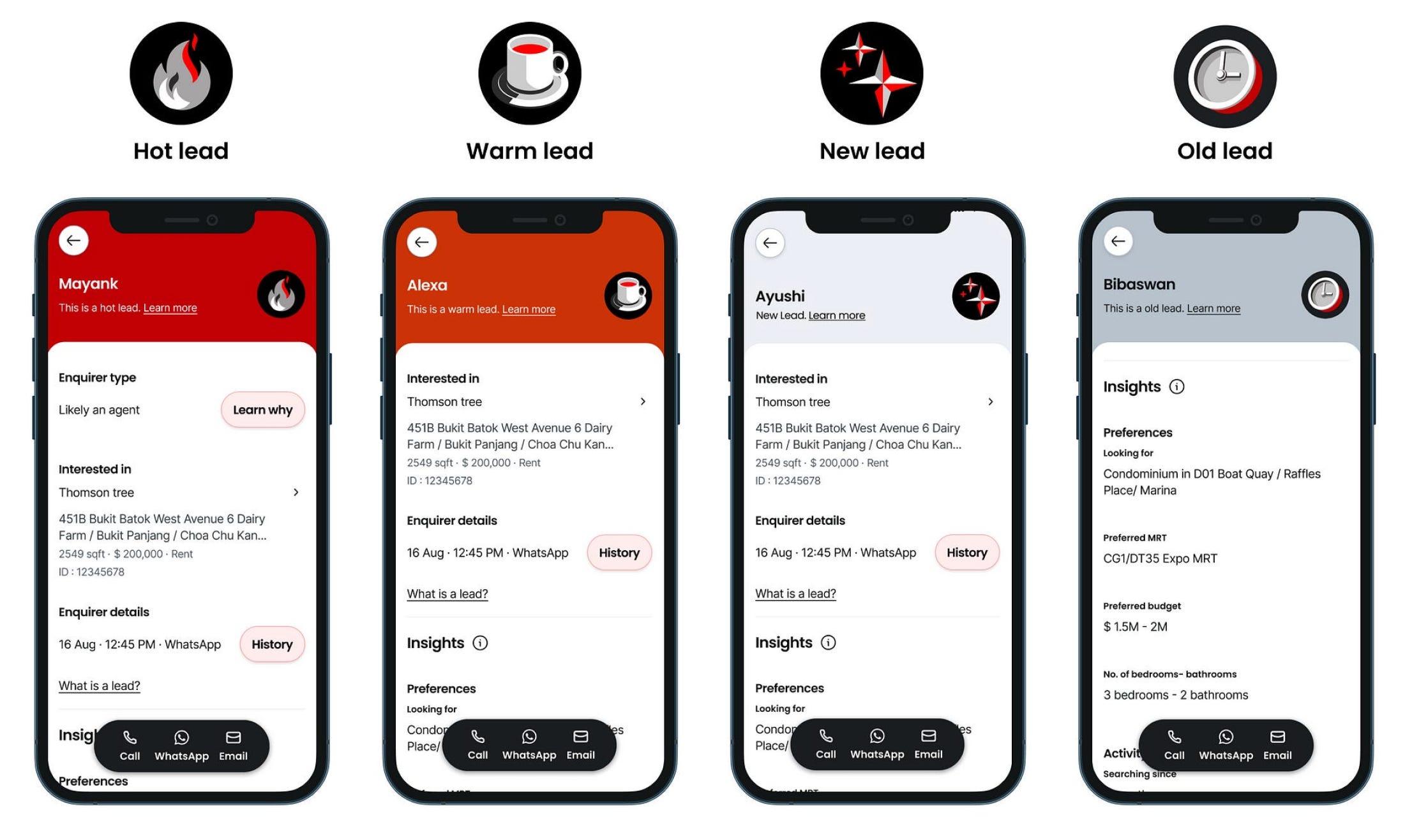
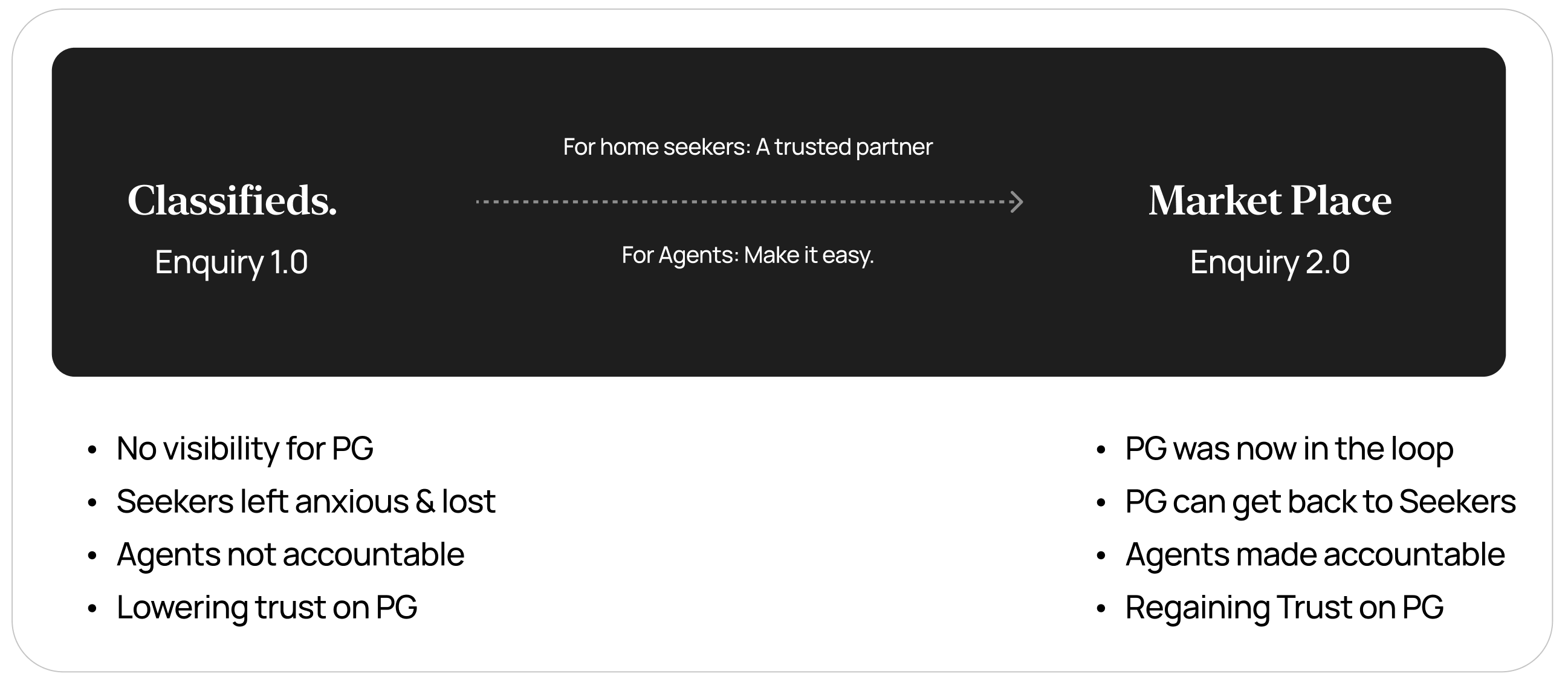
The results was multi-fold
Experience metrics (no degradation)
~700K monthly leads maintained — zero drop during transition
NPS held steady at 65–66%
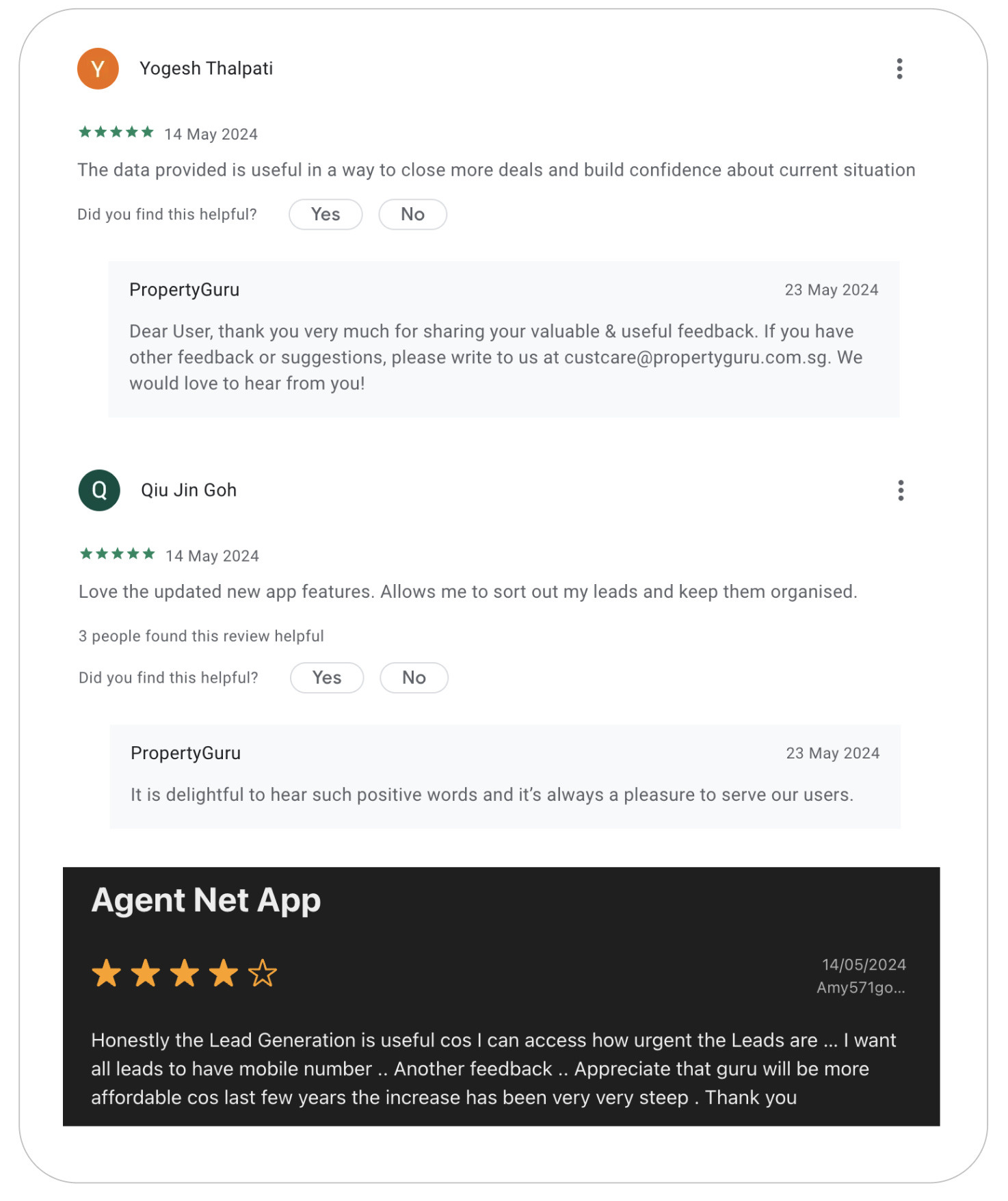
App Store / Play Store ratings unchanged
2-minute median delay to connect parties (acceptable trade-off for marketplace visibility)
Adoption (exceeded targets)
80% agent adoption of Lead Management within 3 months (target was 50%)
Beta agents became internal advocates — several volunteered to demo to their agencies
Platform shift
For the first time in 16 years, PropertyGuru had visibility into the seeker-agent conversation
Lead Management patterns became reusable infrastructure across other 3 geographies (MY, TH, VN)
Opened the door to listing quality scoring and agent response tracking, which was previously impossible without the marketplace loop
Takeaway
This transformation required alignment across Product, Engineering, Sales, Legal, Compliance, Data, and Marketing. It was the most complex cross-functional initiative I've led. Changing a 16-year-old business model required every team to believe the new model would serve them better. The design team's role was to make that belief tangible through prototypes, evidence, and shipped experience.
10 Key learnings
In two-sided marketplaces, sequence matters more than the actual feature set. Finding right balance is critical.
Think first principles and explain the rational behind decisions. Agents adopted Lead Management because it made their daily work better.
Scope and prioritise right research. Focusing on Singapore saved us six weeks. Knowing JBTD of agents was critical to build evidence of a known problem.
Reinvent only when really required. WhatsApp won over custom chat because it removed adoption risk.
Building consensus is an art. Each teams have their incentives (fair enough). Design stands for users. The design team’s job was translating one vision into multiple languages to align teams.
Build proof before you make strategic bets. Validating ideas through workshops and research is critical.
Planning is guessing. But it’s good to plan. Planning helps in pivoting if things go wrong for such high stake changes.
Working with diverse set of people and opinions, especially in design - Being nice to people is important. Praise in public, tough feedback in private.
Show and tell - Super power of designers. The project’s real power was simulating flows, communication and what will actually be shipped.
Using AI is inevitable and also smart. Build AI muscles. A lot of scrapping and crawling of existing complaints was done under a week when AI was used effectively.
I truly believe in trusting the process but more importantly, people. Hope you enjoyed reading this post and learnt few new things.